Hayti's Unfinished Mandate: A Diplomatic Call to Restore the First Black Republic
By Raphaël Biassou Hérissé, Ph.D.
Retired U.S. Diplomat and Founder of Wayom Ayiti
December 5, 2025
The Haytian Revolution remains one of the most profound human uprisings in modern history. In 1804, enslaved Africans in Saint-Domingue defeated the armies of France, Spain, and Britain and established the first free Black republic. This victory reshaped ideas of governance, racial hierarchy, and human rights throughout the Atlantic world.[1] For many nations—whether in Africa, South America, or the Caribbean—Hayti was the earliest beacon of liberation. Hayti provided refuge, military assistance, moral leadership, and political recognition long before these regions could articulate sovereignty.
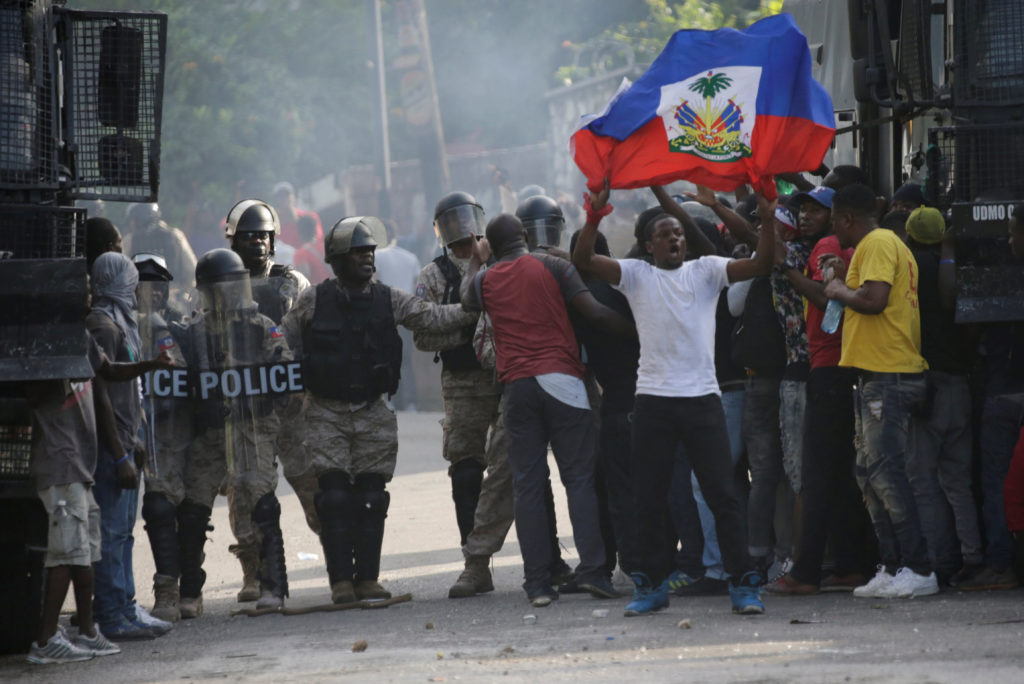
Yet the First Black Republic today faces its deepest crisis since the U.S. Occupation of 1915. Communities such as Pont-Sondé, once hubs of rural commerce and culture, lie under siege. Thousands have fled to St. Marc, enduring conditions unworthy of any human being. Hayti stands at a crossroads, where national collapse and national rebirth walk side by side.
This essay seeks to illuminate Hayti-s historic role in global emancipation, expose the roots of its current political decay, and outline a pragmatic pathway for security, rebuilding, and Pan-African reconciliation.
Urgent Context: December 2025
As this paper circulates, Pont-Sondé remains under siege. The humanitarian corridor between Artibonite and Port-au-Prince has collapsed. Thousands of internally displaced persons shelter in St. Marc under conditions that violate basic human dignity. The window for intervention is closing rapidly. Political instability in the United States economic contraction globally, and the rise of authoritarian governance threaten to render Hayti invisible once again, just as it was rendered invisible after its revolution shocked the world. This is a crisis that demands immediate, coordinated, and morally
grounded action.
I. Hayti’s Revolutionary Impact on Africa, the Caribbean, and South America
Hayti and Africa: A Lost Connection
After independence, Hayti became the first nation to constitutionally offer citizenship to all Africans and their descendants.[2] Its very existence challenged the slave system that still governed African economies, which explains why African kingdoms could not materially support Hayti’s revolution. Many were already destabilized by warfare, European encroachment, and dependence on slave exports.[3] Yet throughout the 20th century, Hayti provided political and symbolic support to African independence movements. Haytian intellectuals influenced the early ANC and Pan- African Congresses.[4] Haytian police officers supported the Congo Crisis (1960–1962), marking the first Haytian deployment in Africa.[5] Haytian diplomatic recognition strengthened Ethiopia and Liberia as Black sovereign states. Hayti was among the few states to recognize Biafra’s independence in 1967, breaking international silence.[6]
Hayti and South America: Military and Diplomatic Aid
Hayti directly enabled independence in South America. President Alexandre Pétion provided weapons, ammunition, printing presses, and safe harbor to Simón Bolívar on condition that he abolish slavery in liberated territories, a promise Bolívar honored.[7] Haytian officers traveled with Bolívar’s forces, training troops across Venezuela and Colombia.[8] Bolívar himself declared Hayti & the cradle of South American liberty.[9]Hayti and the Caribbean: A Beacon for Regional Liberation Hayti supported Caribbean freedom movements ideologically and materially. Haytian revolutionaries inspired uprisings in Barbados, Jamaica, Grenada, St. Lucia, and Trinidad. Hayti provided safe passage, funds, and weapons to freedom fighters in Cuba and Puerto Rico in the 19th century.[10] The republic supported anti-colonial leaders across the region, earning the admiration of Marcus Garvey and C.L.R. James.
Foreign Fighters in Hayti’s Revolution
Ironically, when African nations were unable to intervene, it was often ordinary individuals who joined Hayti. Over 5,000 Polish soldiers defected from Napoleon’s army and joined Dessalines, becoming known as Les Polonais Noirs.[11] Middle Eastern migrants, especially Syrians and Lebanese, later played key roles in trade, publishing, and political reform during Hayti’s early republic.[12] Their participation demonstrates the universal moral appeal of Hayti’s liberation movement.
II. The Current Crisis: A Manufactured Collapse
The proliferation of armed groups is a direct consequence of a collapsed national police force, inconsistent international engagement, a political system hollowed by corruption and elite capture, and a weapons pipeline flowing largely from U.S. ports through Dominican routes.[13] Gangs today control over 80% of Port-au-Prince, and their influence threatens to extend deeper into Artibonite, the agricultural heartland. With the loss of elected institutions and the absence of a functioning constitutional order, Hayti’s political class has fractured. Foreign-led solutions have been inconsistent, often prioritizing stability for external actors instead of justice for Haytian citizens.
Why I Write This: Personal and Professional Authority
I write as a son of Artibonite. My grandfather, Justin Jean-Pierre, served as Pè Savann lay priest) in Pont-Sondé until his death in 1967. The church where he prayed, the roads where he walked, the families he baptized—all now exist under the shadow of armed violence.
I write also as a retired U.S. diplomat with over 25 years of experience in international development, including extensive work in Hayti and West Africa. I hold a Certificate in Public Policy from Harvard University. I have witnessed how policy failures compound into humanitarian catastrophes when the international community treats sovereignty as a technicality rather than a sacred trust. Yet here is the irony: despite these credentials, I find myself joining the ranks of caring and qualified professionals in Hayti and the diaspora who have been marginalized, standing idly by while our homeland burns. We watch. We analyze. We discuss. But we do nothing. I had to do something. This paper is that something. Hayti is a first state, the first to abolish slavery through revolution, the first to constitutionally recognize universal Black citizenship, the first to prove that enslaved people could govern themselves with dignity and vision. What has collapsed is the international order that has systematically punished Hayti for its audacity.
This paper offers a pathway to honor Hayti’s revolutionary mandate by supporting Haytians in reclaiming their sovereignty, security, and prosperity.
III. A Pathway Toward Peace, Redemption, and National Restoration
Immediate Humanitarian Protection for Artibonite and Rural Safe Zones
The first priority must be the deployment of AU, CARICOM, and OAS civilian protection units to Artibonite’s rural corridors. Humanitarian corridors must be established for Pont- Sondé to St. Marc to Gonaïves. Safe passage for women, farmers, and children must be restored immediately.
Reconstituting Hayti’s Security Sector
I propose launching a vetted, community-based Territorial Security Auxiliary Corps to reinforce the national police. Secure rural bases in Artibonite and Nord-Ouest should be used to train units away from gang influence. Biometric identification must be deployed to prevent infiltration. The emphasis should be on police capacity first, rather than military solutions that have historically failed Hayti.
Transitional Governance Compact
An inclusive governing council approved by the AU, OAS, and CARICOM should be established with an 18-month mandate. This council would oversee constitutional reform, develop an anti-gang security strategy, re-engage diaspora and civil society, and establish a timetable for federal elections.
Economic Revival Centered on Agriculture, Reforestation, and Pan-African Trade
Hayti’s economic rebirth must begin in Artibonite, the nation’s breadbasket, and extend through strategic partnerships with African nations that share Hayti’s agricultural and
ecological challenges.
Immediate agricultural recovery requires launching a Hayti-Africa Pan-African Agribusiness Corridor beginning in Artibonite. An agricultural insurance fund for displaced farmers in Pont-Sondé, Canaan, and rural zones must be created. Seed banks, irrigation systems, and rural market infrastructure must be restored. Reforestation and environmental restoration should include partnerships with Guinea in
West Africa on reforestation exchanges. Guinea protects 14 river sources serving over 300 million people downstream. Hayti can restore watersheds in Artibonite and Nord- Ouest through mutual learning and mutual benefit. Carbon credit programs should fund both Haytian and Guinean forest protection. Diaspora investment in tree-planting initiatives, including fruit trees, timber, and medicinal plants, should be actively encouraged.
Digital trade and diaspora engagement can be strengthened through special economic zones managed jointly by diaspora chambers of commerce. A digital marketplace connecting Haytian farmers with diaspora consumers in North America, Europe, and Africa should be established. Remittance-backed microfinance for agricultural cooperatives would provide sustainable capital. This approach honors Hayti’s revolutionary legacy by centering sovereignty, where Haytians lead; partnership, where Africa serves as ally rather than patron; and sustainability, encompassing both environmental and economic dimensions.
A Truth, Memory, and Reconciliation Process
Atrocities committed in Pont-Sondé, Canaan, Croix-des-Bouquets, and Martissant must be documented. Vodou, Christian, Islamic, and Indigenous spiritual leaders should be engaged in national healing. Reparations and compensation must be linked to justice mechanisms.
This pathway honors Hayti’s revolutionary legacy by grounding national renewal in justice, sovereignty, and community resilience.
IV. Call to Action
The international community must stop treating Hayti as a problem to be managed and instead recognize it as a nation whose freedom anchored the liberation of three continents. The world owes Hayti partnership, not charity. Haytians at home and abroad must reclaim the revolutionary spirit that carried Toussaint, Dessalines, Sanité Bélair, and Catherine Flon across impossible terrain. Hayti’s rebirth
begins when its people refuse to surrender land, dignity, or identity. Pont-Sondé, today under siege, stands as a symbol of Hayti’s crossroads. If we secure Pont-Sondé, we secure the Artibonite. If we secure the Artibonite, we secure the nation.
To the African Union, CARICOM, and the Haytian Diaspora
Hayti stood with Africa when Africa could not yet stand for itself. Hayti armed Bolívar when South America was still enslaved. Hayti inspired the Caribbean’s liberation movements when colonial powers seemed invincible. Now, as Hayti faces its deepest crisis, the question is whether the world will honor the debt it owes to Hayti. This is reciprocity. This is justice. This is family. Pont-Sondé is an African crisis, a Caribbean crisis, a human crisis. If we secure Pont-Sondé, we prove that solidarity is practice, rather than slogan. If we fail Pont-Sondé, we betray the revolutionary ancestors who gave everything so we could be free.
The time is now. The mandate is clear. Hayti must rise again, and we must rise with her.
Footnotes:
[1] Laurent Dubois, *Avengers of the New World* (Harvard University Press, 2004).
[2] Hayti Constitution, 1816, Article 44.
[3] John Thornton, *Africa and Africans in the Making of the Atlantic World* (Cambridge,
1998).
[4] George Padmore, *Pan-Africanism or Communism* (Doubleday, 1956).
[5] UN Archives: ONUC Peacekeeping Deployment Records, 1960.
[6] John de St. Jorre, *The Nigerian Civil War* (Hodder & Stoughton, 1972).
[7] Robert L. Madden, "Bolívar’s Debt to Hayti," *Caribbean Studies*, 1968.
[8] Walter Mignolo, *The Idea of Latin America* (Blackwell, 2005).
[9] Simón Bolívar, Cartagena Letters and Jamaica Letter, 1815.
[10] Ada Ferrer, *Freedom’s Mirror* (Cambridge, 2014).
[11] Jan Pachonski, *The Haytian-Polish Legion* (1979).
[12] Paul Farmer & Nancy Scheper-Hughes, *The Uses of Hayti* (1994).
[13] U.S. ATF Firearms Trafficking Reports (2021–2024).
[14] This paper was developed in collaboration with advanced analytical tools and research assistance. All arguments, conclusions, and policy recommendations reflect the author’s expertise and judgment.